A bra fits when it stays comfortably in place while you move around normally, and you stop thinking about it. The size on the tag matters less than what the band, straps, front, and fabric actually do once it's on.
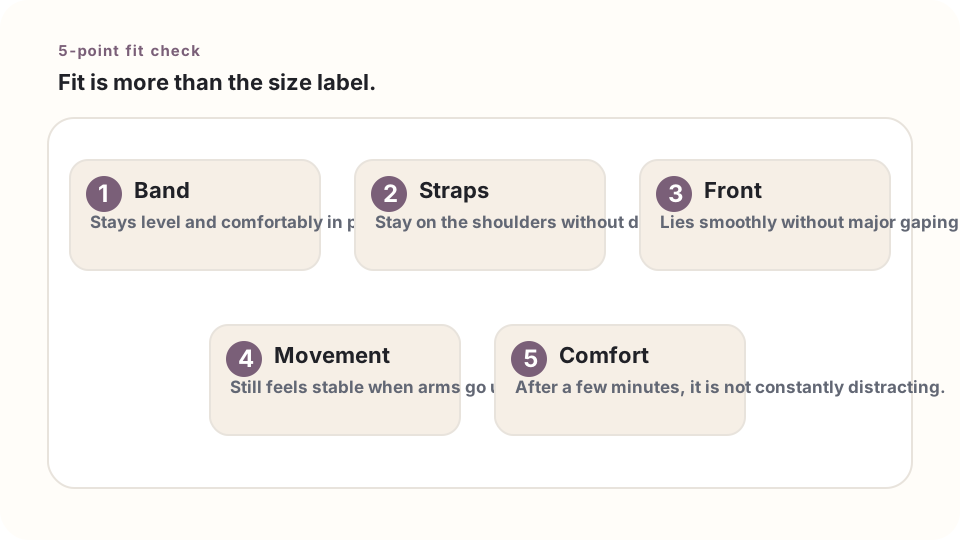
The 5-point fit check
Band → straps → front → movement → comfort. Check all five. Getting one of them right doesn't cancel out a real problem with another.
1. Band
The band does most of the work. It should stay level around the body instead of riding up the back. It should feel secure without pinching, hurting, or making it hard to breathe normally.
2. Straps
Straps should stay on the shoulders without needing to be pulled up over and over. If they're adjustable, snug is good — but don't tighten them just to make up for a band that's too loose.
3. Front
The front should sit comfortably. Big empty folds or obvious gaps usually mean the size or shape is off. Feeling squeezed or like things are spilling out means the opposite — try a bigger size or a different cut.
4. Movement
Raise both arms, reach forward, bend, twist, walk around. For sports, actually do the movement it's meant for. If it looks fine standing still but moves around a lot once your kid is active, that's not a good fit — no matter what the tag says.
5. Overall comfort
Your kid should basically forget they're wearing it. If they keep adjusting it, scratching, tugging the band down, or fixing the straps, that tells you something. Seams, tags, padding, and fabric can all cause discomfort even when the size itself is right.
Match the problem to the fix
| What's happening | Likely cause | Read this next |
|---|---|---|
| Band rides up | Band's too loose or stretchy, or wrong style | Riding-up guide |
| Straps fall down | Needs adjusting, or the shape doesn't match their shoulders | Strap guide |
| Front gaps open | Wrong size, shape, or construction | Gaping guide |
| Something that used to fit doesn't anymore | Growth, worn-out fabric, or lots of washing | Growing-out guide |
When it's not really a fit problem
Adjusting clothes can fix a lot of fit issues, but ongoing pain, a new lump, discharge, a skin injury, or any other symptom like that isn't something we can help diagnose here. Those belong with a doctor, not a size chart.
Sometimes it's the style, not the size
If one size feels loose in one spot and tight in another, going up or down a size might not fix it. Different necklines, strap placements, band heights, and fabrics all sit differently on a body. Trying a different style is often more useful than cycling through every size of the same cut.
Give it more than ten seconds
Something can feel fine for a quick mirror check and get annoying after sitting through class or wearing a backpack all day. When you can, leave the tags on and have your kid wear it around normally for a while before deciding it fits — long enough to notice slipping, rubbing, or seams that bother them.
Think about what it's actually for
An everyday school bra usually needs to be soft and invisible under clothes. A sports bra needs to stay put during activity. One bra doesn't have to do everything — it's fine to have different bras for different purposes.
Sometimes it's the construction, not the size
If the measurements and band fit look right but it still feels wrong, check the actual construction and fabric. Fixed straps, stiff elastic, bulky removable pads, or seams in the wrong spot can cause discomfort that changing sizes won't fix.
If the size seems right but the bra still feels wrong, compare construction choices or choose a better match for the wearer’s use case.