Find a bra
Filter by use and construction, then see why each product matched.
Open the Finder →Straightforward, age-appropriate help with fit, sizing, comfort, and style — for first-time wearers and the parents helping them shop.
Fit, feel and what the wearer actually wants matter more than labels.
You don't need to learn everything at once. Open the section that matches the question you have today.
Understand what a training bra is, when someone may want one, and what to look for first.
Explore the First Bra Hub → 02Sizing & Fit Need help with size?Measure, read manufacturer charts, troubleshoot fit and compare sizing systems carefully.
Go to Sizing & Fit → 03For Parents Helping your child?Practical guidance for shopping, privacy, comfort and making the first-bra conversation easier.
Open the Parent Guide → 04Decision Tool Know what matters?Filter verified products by use case, padding, closure, straps and fabric feel.
Use Find My Bra →
Training bra sizing isn't consistent from brand to brand. Some use kids' clothing numbers, some use XS–XL, others use band-and-cup sizing. We keep these systems separate instead of pretending one label converts neatly into another.
We use the same simple checklist everywhere on this site: band, straps, front, movement, and comfort.
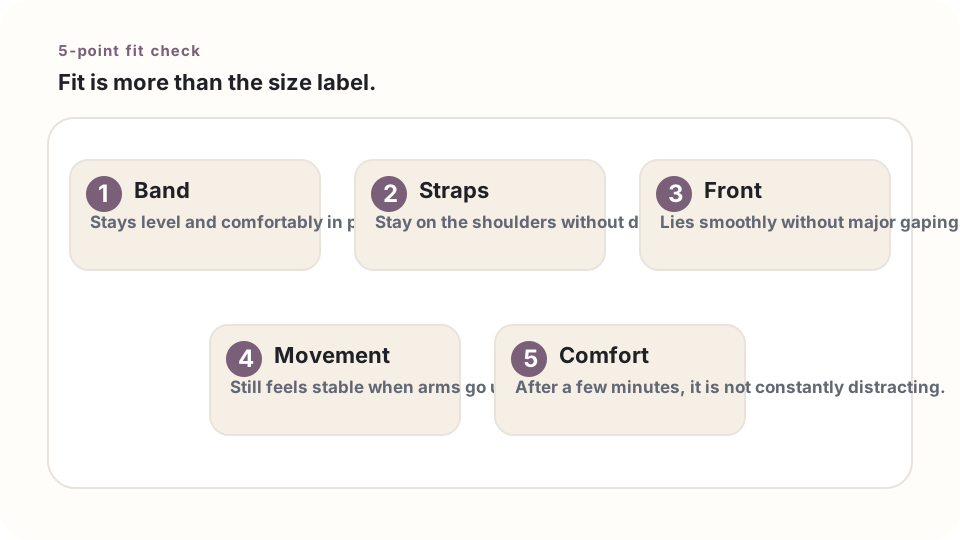
Level, stable and comfortably in place.
Stay on the shoulders without digging.
Sits smoothly without major gaping or compression.
Still feels secure when arms and body move.
Does not require constant adjusting or distraction.
Our Finder, product comparison, and cross-brand sizing tools all pull from the same verified product and sizing data.
Filter by use case, padding, closure, straps, and feel. Results explain why each one matched.
Open Finder → 02Put two or three verified products side by side and see how they actually differ.
Compare Products → 03Enter one set of measurements and see how different brands would label it.
Compare Sizing →The best first-bra shopping trips are usually private, low-key, and focused on what actually feels comfortable. Our parent resources stick to practical choices — not pressure or made-up age rules.
Anything about puberty or development comes from named pediatric sources. Product and sizing details are tied back to the actual brand, or a retailer we can clearly identify. When we don't know something, we say we don't know it instead of guessing.
Filter by use and construction, then see why each product matched.
Open the Finder →Put two or three verified profiles side by side.
Compare products →Get a next step from measurements, product choice, or a fit issue.
Open Size Assistant →How sizing systems work, without guessing from age.
Open size guide →