A first bra isn't a milestone that happens at one exact age. It's just a clothing choice that becomes useful when someone wants coverage, comfort, support during activity, or simply feels ready to try one.
How to use this guide
Read it top to bottom for the full picture, or jump straight to the section you need using the links on the right.
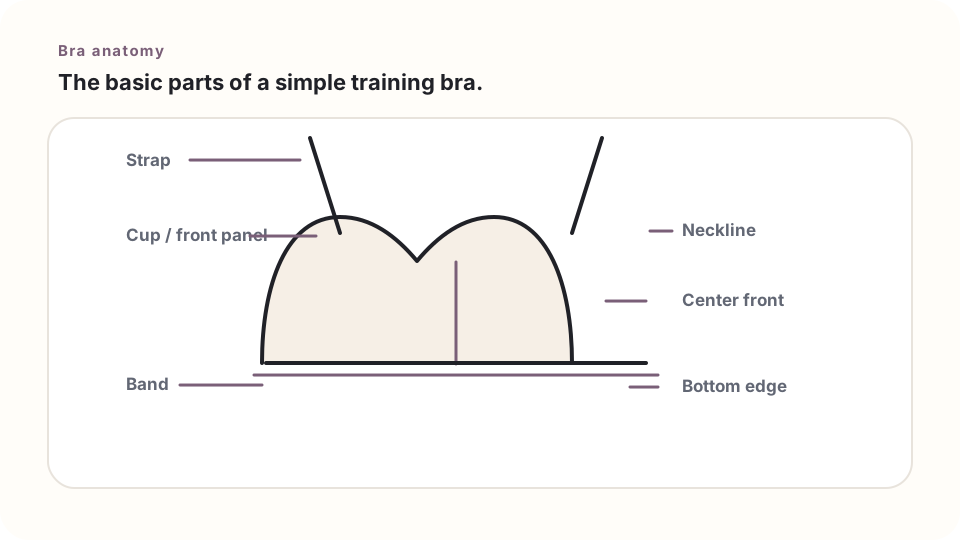
Bra anatomy
The basic parts of a simple training bra, labeled.
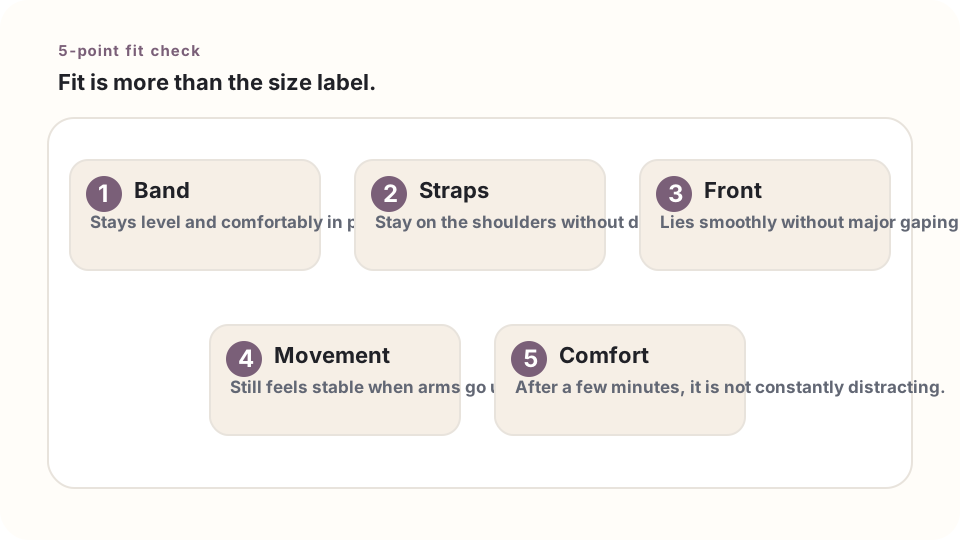
5-point fit check
Jump to the checklist below before assuming you need a different size.
The short answer
A training bra is usually just a light, wireless bra built for simple coverage and comfort. It doesn't train anything or change how a body develops. It's also only one option — a bralette or sports bra can work just as well, depending on what your kid wants.
Why someone might want a first bra
People end up wanting one for all kinds of reasons. Clothes might start feeling different. Sports or gym class might feel less comfortable. They might want more coverage under a t-shirt or school uniform. Or they might just want to try wearing one — that's reason enough on its own.
None of these need to line up with a specific birthday. The American Academy of Pediatrics says puberty usually starts in girls somewhere between ages 8 and 13, and breast development is often one of the first signs. It can also start unevenly, with one side changing before the other. All of that is normal — none of it means there's a fixed age when a bra suddenly becomes required.
What is a training bra, really?
Most training bras today are simple and wireless, without much structure. Common features: pulls over the head, stretchy band, soft cups or a front panel, smooth seams, and little to no padding.
The word "training" is leftover marketing language from decades ago. A training bra doesn't train breasts to grow a certain way, and it doesn't speed up, slow down, or change development at all.
Training bra, sports bra, or bralette?
| Style | What it's good for | Good first choice when… |
|---|---|---|
| Training bra | Simple coverage, light support | They just want an easy everyday layer. |
| Sports bra | Support during movement | Sports or activity is the actual reason they want one. |
| Bralette | Soft comfort | They want something casual with barely any structure. |
| Seamless pullover | Smooth under clothes | They care most about it not showing under a t-shirt. |
Nemours KidsHealth points out that sports bras are a common first choice — they're often comfortable for activity and simpler in construction than other styles.
The 5-point fit check
A size chart gets you close. Here's how to check it actually works in real life.
- Band: Stays level, doesn't ride up the back. Secure, not painful.
- Straps: Stay on the shoulders, no digging in or leaving marks.
- Front: Sits comfortably — no obvious gaps, nothing squeezing.
- Movement: Arms up, bend, twist, walk around. It should stay roughly in place.
- Comfort: After a few minutes, they're not fidgeting with it.
How sizing actually works
First bras are sold through a few different systems — some use kids' or regular clothing sizes, some use XS–XL, some use real band-and-cup sizing. That mix is exactly why first-bra shopping feels confusing.
We're not going to pretend there's one formula that converts every brand's sizing into another. Use the measuring guide, match those numbers to that brand's current chart, then double-check the result with the 5-point fit check.
Why sizing by age doesn't work
Age alone is a bad way to pick a size, because kids the same age can have very different bodies and be at very different stages of development. Actual measurements and how it actually fits matter a lot more than however many birthdays someone's had.
Shopping for a first bra
A good first shopping trip should make things easier, not more stressful. You don't need a whole drawer full before you know what your kid actually likes.
- Start with one or two simple styles.
- Check the return policy before you buy.
- Go for soft fabric and simple construction.
- For sports, test it doing the actual movement it's meant for.
- For school, check how it looks under a normal shirt or uniform.
- Expect the first size might not be quite right — that's normal.
A few features explained
Padding
Padding adds coverage or shape — it's not automatically "better." Removable pads are flexible but can shift around in the wash.
Straps
Adjustable straps help the fit keep up as your kid grows. Fixed straps are simpler but leave less room to adjust.
Closures
Pullover styles are simple, no clasps involved. A hook-and-eye closure at the back can be easier for some people to get in and out of, and lets you adjust the band slightly.
Seams and tags
For a kid who's sensitive to texture, flat seams and no tags usually matter more than how it looks.
Mistakes worth skipping
- Buying by age alone. Use real measurements and check the actual fit.
- Assuming it has to be a "training bra." A sports bra or bralette might genuinely be more comfortable.
- Buying a big multipack right away. Figure out what works first.
- Keeping a bra that's uncomfortable because the tag says it should fit. Fit always beats the number on the label.
- Making it a bigger deal than your kid wants it to be. Low-key and private usually works better.
A note for parents
"Would you like to try one?" is usually more useful than "Don't you need a bra yet?" Some kids want coverage before you'd think it's necessary. Others don't want one even after they've started developing — and that's fine too.
Give them a couple of options, let them know the first try might not be perfect, and let them be the one who decides what actually feels right.
When it's a health question, not a clothing one
This site covers clothing and shopping — it's not a substitute for a doctor. The American Academy of Pediatrics recommends talking to a pediatrician if puberty starts before age 8, hasn't started at all by age 13, or if there's pain, a lump, discharge, or anything else that isn't just about how clothes fit.
Where to go from here
Once the basics make sense, check out the fit and comfort guide or the shopping guide. Or head to Sizing & Fit for measuring, size charts, fit problems, and the Size Assistant tool.
Pick a style based on what it needs to do
Once you know what you're looking for, use the Bra Types page to compare sports bras, bralettes, seamless, pullover, racerback, padded, and unpadded styles. Then check the Construction and Materials pages to see why two bras with the same label can feel completely different.
Sources
- American Academy of Pediatrics / HealthyChildren.org — Physical Development in Girls: What to Expect During Puberty
- Nemours KidsHealth — Breasts and Bras
Editorial note: Health/developmental facts above are attributed to pediatric sources. Garment guidance is general educational information and is supplemented by manufacturer data in our brand and product databases; direct hands-on testing, when added, will be labeled separately.