Use a soft measuring tape, a few quiet minutes, and a normal standing posture. Don't pull the tape tight to get a smaller number — you want an accurate measurement, not a flattering one.
Do this somewhere private
A bedroom with the door closed works fine. This isn't something that needs an audience.
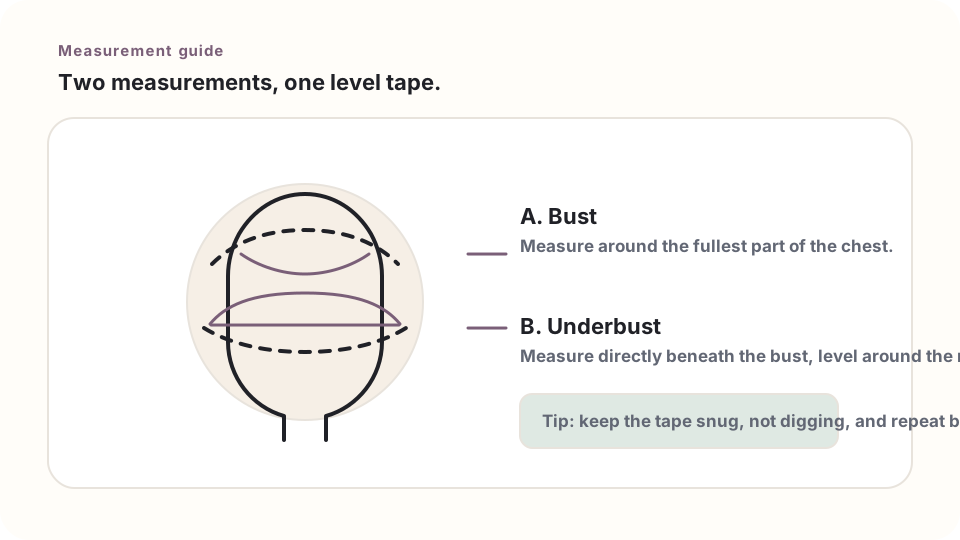
The two numbers you need
Underbust: around the ribcage, right where the breast tissue ends. Bust: around the fullest part of the chest, tape level all the way around.
Before you start
- Use a soft cloth or sewing tape — not the metal kind.
- Bare skin or a thin top works best.
- Stand normally and breathe normally.
- Keep the tape level, not angled up or down.
- Don't cinch it tight to get a smaller number — that just gives you a wrong measurement.
Measuring the underbust
- Wrap the tape around the ribcage, right beneath where the breast tissue ends.
- Check a mirror, or have someone you trust confirm it's level all the way around.
- Snug against the body, but not digging in.
- Write the number down.
- Measure again to double check. If the two numbers are noticeably different, take a third.
Measuring the bust
- Wrap the tape around the fullest part of the chest.
- Keep it level across the back — no drooping.
- Let it rest against the body naturally, not flattened or pulled tight.
- Write it down, then measure again to confirm.
What to actually do with these numbers
Take them straight to the size chart for the specific bra you're buying — every brand runs its sizing a little differently. If a chart only asks for one measurement, just use that one. If it uses regular clothing sizes (like S/M/L), match your measurements to the size ranges it lists rather than assuming your kid's usual shirt size will line up.
Easy mistakes to avoid
| Mistake | What it does | Fix |
|---|---|---|
| Tape slopes up or down | Throws the number off | Keep it level all the way around |
| Pulling it too tight | Makes the measurement smaller than it really is | Snug is enough — don't cinch it |
| Measuring over a thick sweater | Adds extra inches that aren't real | Bare skin or a thin top |
| Using last year's numbers | Kids grow — a lot, sometimes fast | Remeasure if a bra stops fitting right |
Keep it private if that matters to them
For a lot of first-time wearers, privacy matters just as much as getting the number right. Most kids can measure themselves in front of a mirror without any help at all. If they do want help, ask before touching the tape or their clothing. There's no need to make this a bigger event than it is.
Why we say measure twice
The tape can shift or get pulled tighter the second time without you noticing. Two similar readings mean you can trust the number. If they come out noticeably different, measure a third time rather than just splitting the difference.
Write down the unit, not just the number
Some size charts use inches, some use centimetres, some list both. "32" means nothing on its own — write "32 in" or "81 cm" so you're not guessing later, especially if you end up comparing charts across brands.
Two numbers get you a starting point, not a guarantee
Old-school bra-size formulas vary depending on who you ask, and we're not going to pretend two measurements convert into one universal size — they don't work that way. Use your numbers to find the right range on the manufacturer's own chart, then let the actual fit — not the math — make the final call.