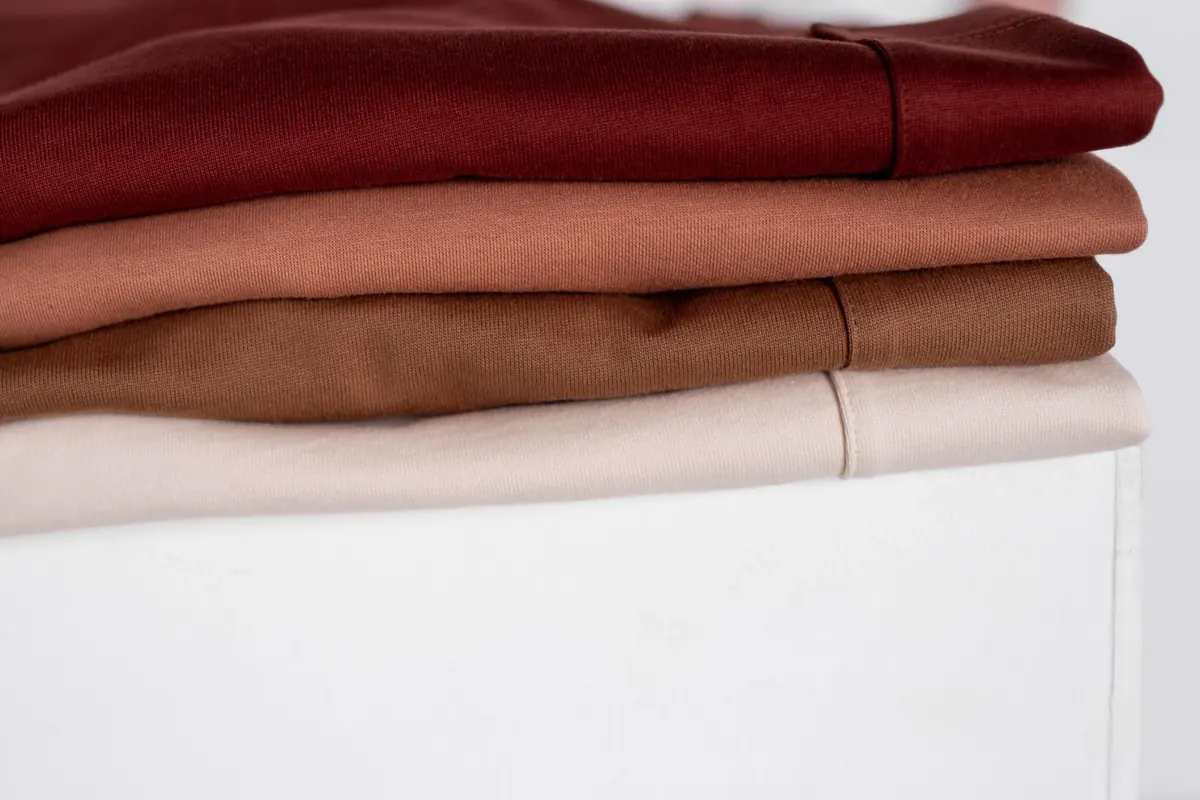
Modal is a soft fiber made from processed wood pulp. In bras, it's usually blended with a stretch fiber and sometimes cotton. Brands often market it for how soft it feels, but the actual blend and construction still decide how it really feels on.
What matters most
- Usually feels soft and drapey
- Almost always blended with a stretch fiber
- Common in bralettes and everyday first bras
- Not the same thing as cotton, even though it starts as a plant fiber
- Care instructions matter for keeping its shape
What modal actually is
Modal is related to rayon — it starts as wood pulp but goes through a chemical process to become fabric. So it's not quite fair to call it fully "natural" or fully "synthetic" — it's really somewhere in between.
Why it shows up in bras
Modal makes a smooth, soft fabric that drapes nicely. Blending it with elastane gives it the stretch a bra actually needs.
Good for everyday comfort
Modal-heavy bralettes tend to feel softer and less "sporty" than nylon seamless styles. Whether that's better comes down to personal preference — the seams and elastic still matter just as much.
Not built for intense activity
A soft modal bralette is great for daily wear, but it's not automatically a performance sports fabric. Check what the brand actually says it's designed for.
Care and durability
Follow the wash and dry instructions on the label. Stretchy, soft-knit fabrics like this can lose their shape if they're washed in hot water or dried roughly too many times.
Quick summary
| Question | Short answer |
|---|---|
| Good for | Everyday wear or first bras, if this fabric matches what your kid needs |
| Check before buying | That brand's own size chart, plus how it's actually built |
| Don't assume | The fabric name alone means it'll be comfortable or fit right |
| Test once it's on | Band, straps, front, movement, and comfort |
| Also worth checking | How it'll actually be used, and how it's constructed |
Mistakes worth avoiding
- Picking a bra just because of the fabric name, without checking the actual product
- Assuming a fabric automatically means good fit
- Not checking how it looks and feels under the clothes it'll actually be worn with
- Buying several at once before trying just one
- Keeping a bra after it clearly stops fitting right
Always finish with the 5-point fit check
Whatever fabric you pick, the real test happens once it's actually on: the band stays level, the straps stay put without digging in, the front sits comfortably, it stays stable when moving, and your kid isn't thinking about it. A fabric or size chart gets you close — it doesn't guarantee the fit.
Where to go next
Shopping checklist for Modal & Rayon-Family Training Bra Fabrics
Before you buy, jot down current underbust and bust measurements, what it's mainly for, how much coverage is wanted, and anything that's felt comfortable or annoying in past bras. Then open that specific brand's current size chart — don't assume a size from another brand or a clothing size will carry over.
When it arrives, keep the tags on until you've checked the fit, so it can still be returned if needed. Test the band, straps, and front while standing, sitting, and raising the arms — and if it's for school or sports, test it doing that too. A bra can look perfect on paper and still be the wrong shape for a particular body.
Frequently asked questions
Does the fabric name tell me it's the right bra?
Not on its own. Words like training bra, bralette, sports bra, seamless, padded, or cotton only describe part of the bra. You still need to check fit, how it'll be used, and how it's built.
If it moves around, should I just go down a size?
Not automatically. Movement can come from a loose band, the wrong style, stretched-out elastic, or the straps needing adjustment — not just the size. Check that brand's chart and run the 5-point fit check before changing sizes.
How do I know if I need a different style, not just a different size?
If the right size still causes rubbing, pressure, slipping, gaping, or constant fidgeting, that's usually about construction, not measurements. Try a different strap, band, closure, fabric, or support style instead of forcing the same design to work.