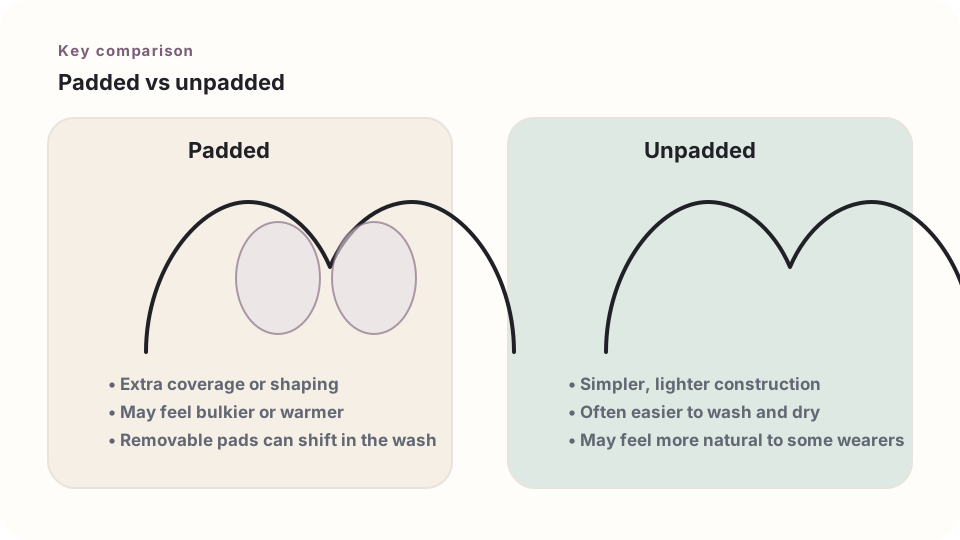
Neither one is automatically better. Padding adds coverage and shape; unpadded can feel simpler and lighter. Removable pads give you flexibility, but they're also one more thing that can fold up or shift around.
What matters most
- How much coverage is wanted
- Whether extra layers or shifting pads are a bother
- How smooth it needs to look under clothes
- How easy it is to wash
- Whether the padding is sewn in, removable, or just a light lining
What "padded" actually means
Padding can mean anything from a barely-there lining to removable foam inserts to a more structured molded shape. The word alone doesn't tell you much — check the actual construction. A lightly lined bra can feel totally different from one with removable contour pads.
Why some kids like padding
Padding can add coverage under thin clothing and give a more even shape up front. Some kids like that predictability for school or under fitted tops. It's a preference, though — not something tied to age or how developed someone is.
Why some kids like unpadded
Unpadded bras usually have fewer layers, dry faster, and skip the annoyance of pads moving around in the wash. Double-layer fabric can still give decent coverage without any foam. An unpadded bra is just as good a first bra as a padded one.
Removable pads are really their own category
Removable pads give you options, but they take a bit of upkeep — they can fold, twist, or shift inside their pocket. Some kids take them out permanently; others like having the choice. If pads matter to your decision, check the product page for their shape, thickness, and care instructions.
Fit still matters more than padding
Padding won't fix a band that rides up, straps that fall, or a front that gaps. And an unpadded bra that actually fits well can look smoother than a padded bra in the wrong size. Solve the fit first — decide on padding after.
Quick summary
| Padded | Unpadded | |
|---|---|---|
| Coverage | Usually more | Depends on the fabric |
| Bulk | Usually a bit more | Usually less |
| Pads shifting | Possible if removable | Not an issue |
| Washing | May need extra care | Usually simpler |
| Under T-shirts | More coverage; edges may show | Can be very smooth |
Mistakes worth avoiding
- Thinking padding is required for a first bra — it's not
- Assuming unpadded means no coverage at all
- Ignoring that removable pads need occasional attention
- Sizing down just to stop pads from shifting
- Picking based on looks before checking the fit
Always finish with the 5-point fit check
Whatever you pick, the real test happens once it's actually on: the band stays level, the straps stay put without digging in, the front sits comfortably, it stays stable when moving, and your kid isn't thinking about it. A size chart gets you close — it doesn't guarantee the fit.
What to read next
Shopping checklist for Padded vs Unpadded Training Bras
Before you buy, jot down current underbust and bust measurements, what it's mainly for, how much coverage is wanted, and anything that's felt comfortable or annoying in past bras. Then open that specific brand's current size chart — don't assume a size from another brand or a clothing size will carry over.
When it arrives, keep the tags on until you've checked the fit, so it can still be returned if needed. Test the band, straps, and front while standing, sitting, and raising the arms — and if it's for school or sports, test it doing that too. A bra can look perfect on paper and still be the wrong shape for a particular body.
Frequently asked questions
Does the label tell me it's the right bra?
Not on its own. Words like training bra, bralette, sports bra, seamless, padded, or cotton only describe part of the bra. You still need to check fit, how it'll be used, and what it's made of.
If it moves around, should I just go down a size?
Not automatically. Movement can come from a loose band, the wrong style, stretched-out elastic, or the straps needing adjustment — not just the size. Check that brand's chart and run the 5-point fit check before changing sizes.
How do I know if I need a different style, not just a different size?
If the right size still causes rubbing, pressure, slipping, gaping, or constant fidgeting, that's usually about construction, not measurements. Try a different strap, band, closure, fabric, or support style instead of forcing the same design to work.