A training bra is a lightweight, low-structure bra that many people wear first. It doesn't "train" the body. It adds light coverage and comfort without underwire or heavy shaping.
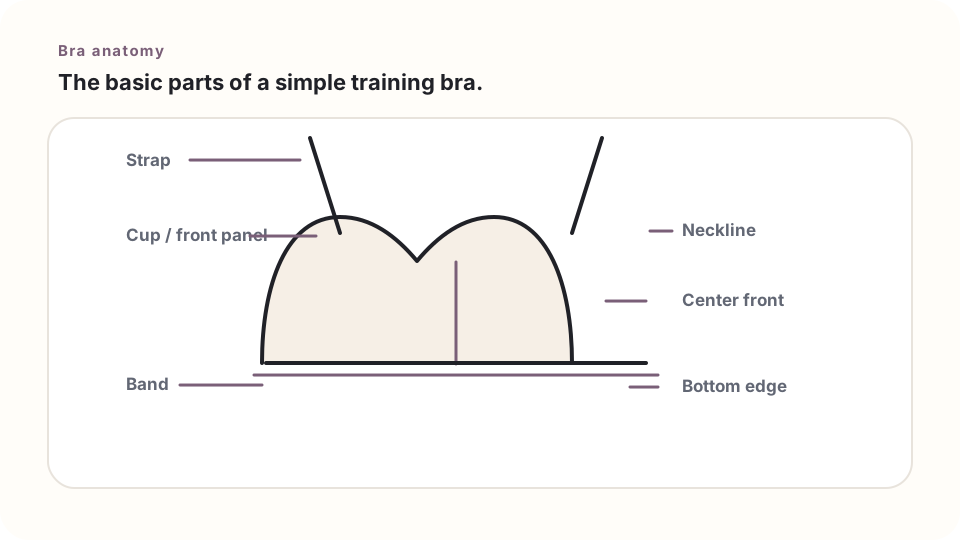
The name is misleading
A training bra does not train anything, and it doesn't control or speed up breast growth — it's just clothing. The name is really just a marketing category. A sports bra, a bralette, or a plain soft-cup bra all work just as well as a "first bra."
So what does the name actually mean?
It's used for bras built around early wear: simple sizing, not much structure, usually wireless. Some pull over the head, others have adjustable straps or a small hook-and-eye closure at the back. Padding ranges from none at all to a light removable pad.
There's no rulebook every brand follows. One uses kids' clothing sizes, another does XS–XL, another uses regular band-and-cup sizing. That's exactly why we say: read the size chart for the specific bra you're buying, don't just trust the category name.
Why kids actually want one
Usually it's one of a few things: more coverage under a t-shirt, more comfort when they're moving around, wanting an extra layer, or just wanting to start wearing a bra like their friends do. None of that has anything to do with hitting a specific age.
For context: the American Academy of Pediatrics notes that breast development in girls typically starts somewhere between ages 8 and 13 — a wide range, and not something you should treat as a countdown to "bra time."
The features you'll actually see
| Feature | What it means for your kid |
|---|---|
| Wireless | Softer, less structured — most training bras are built this way |
| Pullover style | Goes on over the head, no back clasp to fumble with |
| Adjustable straps | Room to fit as they grow, or if straps keep slipping |
| Seamless fabric | Doesn't show through a t-shirt — good for school |
| Light or removable padding | A bit more coverage/opacity, if that's what they want |
Is "training bra" the same thing as "first bra"?
Not quite. A first bra is just whatever bra someone happens to wear first. A training bra is a specific product category. Plenty of kids' first bras are actually sports bras or bralettes, not something labeled "training bra" at all.
Worth knowing, because it means your kid doesn't have to start with one specific type before "graduating" to something else.
Training bra or sports bra?
A training bra is generally about light everyday coverage. A sports bra is built for support during movement. Nemours KidsHealth notes that sports bras are a common first choice, especially for kids who are active. So if gym class or sports is the actual reason your kid wants one, a light sports bra is probably the more useful pick — regardless of what the tag says.
What actually matters when you're buying one
- The band sits flat and doesn't dig in or leave marks.
- Straps stay put without cutting into the shoulders.
- The fabric feels okay against skin for a full day.
- Coverage matches what your kid actually wants, not what you'd pick.
- You can return or exchange it easily — you probably won't nail the size on the first try.
A few things worth clearing up
"A training bra trains the body."
No — it's a piece of clothing, not a medical device.
"Every kid needs one at the same age."
No. Bodies, comfort, and interest all vary a lot from kid to kid.
"You have to start with a training bra specifically."
No — start with whatever simple, comfortable style actually works best.
Readiness without arbitrary age rulesFirst Bra Shopping Guide →
Turn the basics into a practical purchase
Training bra vs. starter bra vs. tween bra — is there a difference?
Not really — retailers just like their own names for the same thing. Starter bra means the same thing as training bra. Tween bra is more about who it's marketed to than how it's built. First bra just describes timing — it's whatever bra someone happens to wear first, not a category of its own. These labels help you search, but don't treat them as meaningful specs.
When you're actually comparing bras, skip the marketing name and look at what matters: sizing system, how the band's built, whether the straps adjust, lining, seams, coverage, and what it's meant for.
How long does a training bra actually last?
There's no set timeline. Size up or replace it when the band stops staying put, the straps run out of adjustment, it starts feeling tight, the fabric's lost its stretch, or your kid just wants something different. Kids can outgrow these fast, and normal washing wears out the elastic too.
Questions we hear a lot
Can a training bra be padded?
Yes — you'll find them unpadded, lightly lined, or with removable pads. That's just a coverage/shape choice, not a sign of whether it's "right" for a first bra.
Are training bras only worn during puberty?
They're mostly marketed that way, but the actual design overlaps a lot with bralettes and soft wireless bras that people of all ages wear.
Do training bras actually support anything?
A little, but not much. For running, jumping, or actual sport, a real sports bra built for movement is usually the better choice.
Sources and editorial context
- American Academy of Pediatrics / HealthyChildren.org — Physical Development in Girls: What to Expect During Puberty
- Nemours KidsHealth — Breasts and Bras
Editorial note: Developmental information is attributed to pediatric sources. Garment and shopping guidance is educational and based on clothing fit principles rather than medical claims.
Related: Training bra vs regular bra